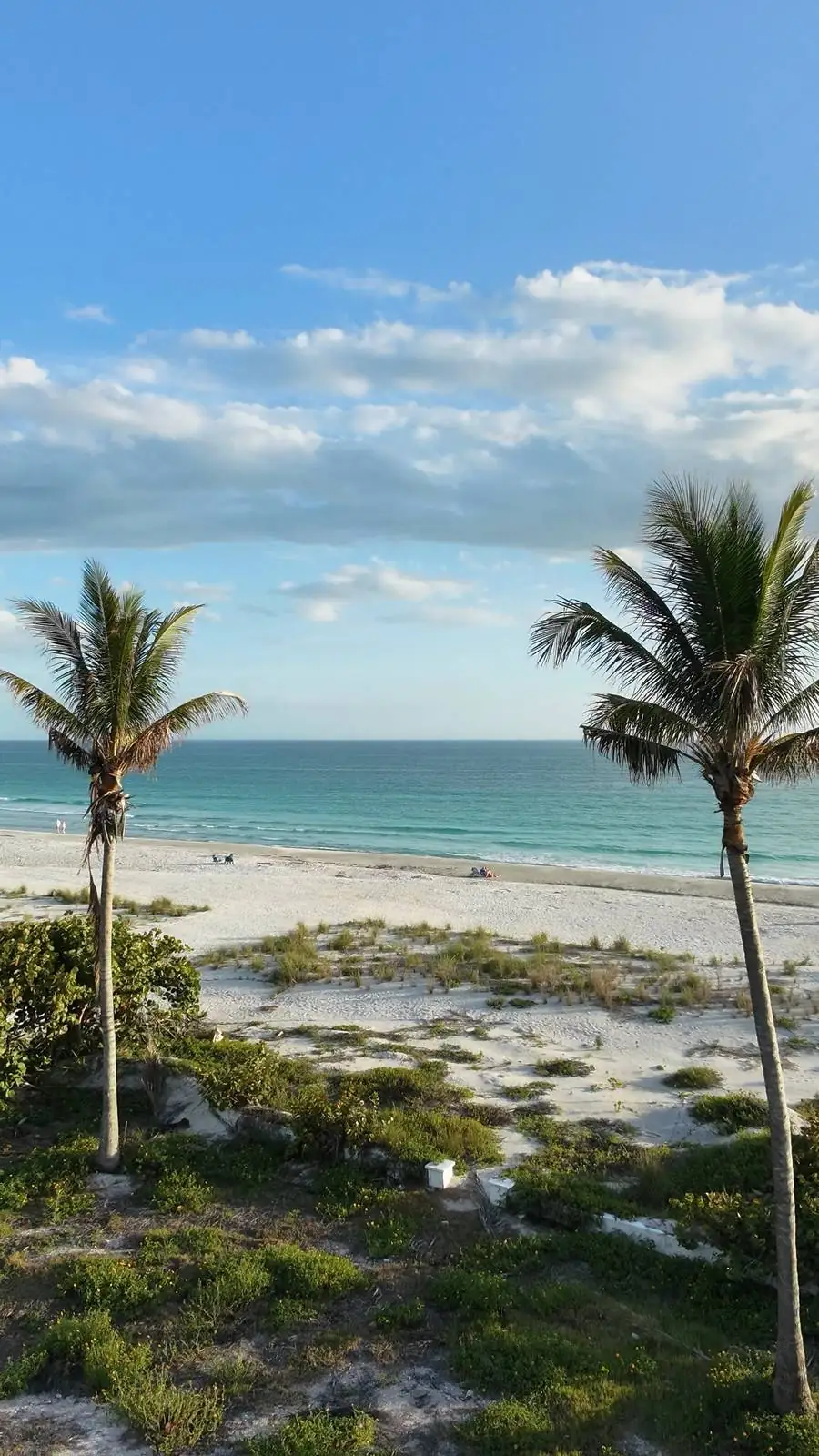

How to relocate to Florida, one step at a time.
Eleven steps, in the order that actually works, with the numbers behind each one. Built by two people who help families do this every week, from Parrish to Venice. Already live in Florida? Most of these steps work the same for a move across the state or across town.
Everyone wants the beach. Almost nobody plans the move.
Relocating to Florida is two transactions, in two states, on one timeline, usually with a builder in the middle. Done in the right order it's calm. Done in the wrong order it's expensive. This is the order.
Anyone thinking about a move to Florida's Gulf Coast in the next twelve months, whether it's a primary home, a second home or a place to retire. If you're further out than that, steps one through four still apply. Save the rest for later. Buying a vacation or winter home rather than moving? Read the second-home roadmap instead; the money works differently.
We're Cydney Hall and Joseph Hoolihan. New construction is what we do, and this is the process we walk our own clients through.
Get pre-qualified.
Start hereBefore the late-night scrolling, before the visit, before you tell the neighbors: find out if you can actually do this.
If you're even remotely thinking about relocating or buying a second home, you need to know whether you can pull it off. Owning a home now, or having owned one before, does not guarantee you'll qualify for the next one. Your income, your debts and today's rates all get a fresh look.
Get pre-qualified with a loan officer who understands the Florida market and how HOAs and CDDs work. Most don't, and they leave those numbers out. Lenders are required to count association dues in your housing expense, and CDD assessments are collected on your property tax bill, so they land in your escrow.8, 9 HOA dues and CDD assessments can add anywhere from about $100 to $1,500 a month to your real payment, and you may or may not qualify once they're in. Better to learn that on a phone call than at the closing table.
- Talk to a Florida lender before you list anything back home.
- Ask exactly how they treat HOA dues, CDD assessments, insurance and taxes in your numbers.
- Get a written pre-approval, not just a pre-qualification. Builders and sellers take it seriously.
- Know your true monthly payment, not just the price you can afford.
- Get the pre-approval done early. It's what lets you close in 30 to 60 days when the right move-in-ready home comes up.
Set your timeline.
The 12-month ruleIf you're more than twelve months out, do the next two steps and then pause. Pick a community later.
Things move here. The community you toured last spring has new phases, new prices, new incentives and sometimes a sold-out sign by the following winter. Don't think that neighborhood will look the same next year. It won't.
Six to twelve months out is the time to choose your area and a short list of communities. Further out than that, do your homework and your visit, then wait. Closer than six months, you'll want quick move-in inventory, and we should talk this week.
Plan in months. Buy in 30 to 60 days. The best deals, discounts, incentives and below-market rates are on homes that are ready now and can close within 30 to 60 days. The whole point of your timeline is to be ready to close in that window when the right home comes up.
- Decide the month you want to be living here.
- Work backward from it: list, sell, build or close, move.
- If you're more than 12 months out, stop after step 4 and check back in with us.
- If you're less than 6 months out, ask us about quick move-in homes that can close in 30 to 60 days.
- Whatever your date, line up what you'd need to close in 30 to 60 days: pre-approval, down payment and a plan for your current home.
Do your homework online.
ResearchThe internet is where every search starts. Just don't let it be where it ends.
Learn the five areas we work in every week, the real drive times between them, and what it costs to live in each. Learn the difference between an HOA and a CDD, what Florida homeowners insurance runs, and how property taxes work here. We built two free resources for exactly this.
The trap is trusting listing photos and a map pin over the drive you'll make every Tuesday. Use the research to build questions, not conclusions.
- Read The Guide: each area, the drives, what a Saturday looks like.
- Use The Edge to compare communities, builders, HOA and CDD fees side by side.
- Look up insurance and property tax estimates before you fall in love with a house.
- Follow us on social for what's changing right now.
Visit. For days, not a weekend.
Boots on the groundCome in July, not just February.
Spend real time here. Five days at minimum, a week or two if you can, and at least one trip in summer. Drive the commute at rush hour. Go to the grocery store. Sit on the beach on a Saturday. Tour the model homes with us, and see the community you're considering on a weekday afternoon, not just a sales-center Sunday.
You're choosing a life, not a lot. The only way to know if a place fits is to live a few ordinary days in it.
- Book five to seven days, and include summer if at all possible.
- Do the drives you'll actually make: work, airport, groceries, the beach.
- Tour no more than three or four communities a day. They blur together after that.
- Keep notes on each one the same night, while it's fresh.
Narrow it to one area and a short list.
DecideFive areas. Two you'll love. One that fits.
After the visit, the fog lifts. Parrish is not Sarasota. Lakewood Ranch is not Venice. Each of our areas has a personality, a price point and a commute, and by now you'll feel which one is yours.
We'll help you cut five to two, then two to one, and then to two or three communities inside it. That's the list we work from. Everything after this step gets faster and calmer.
- Rank your must-haves: budget, drive time, schools, water, golf, walkability, HOA rules.
- Pick the area. Then pick two or three communities inside it.
- Ask us what's ready now and what's coming: quick move-ins, new phases, price changes and this month's incentives.
- Be honest about what you'd give up. Every choice here is a trade.
Build the plan.
SequenceSell first or buy first? That's the whole plan.
Most people need the money from their current home to buy the next one, and most builders prefer buyers who aren't waiting on a sale. So the order matters. New construction takes months to build, which can work in your favor: you contract now, sell during the build, and close on both around the same time. Quick move-in homes flip that timeline entirely, and they're where the best deals are.
We'll map the dates backward from your move-in month: listing, sale, deposits, build milestones, closing and the moving truck. And we'll plan where you'll live in between, whether that's a leaseback on your old home or a short rental here.
Build the plan backward from a 30 to 60 day close. If your plan can get you from contract to keys in that window, you can say yes to the homes with the best incentives. If it can't, those homes go to someone else.
- Decide sell-first or buy-first with your lender in the room.
- Know the build timeline for the community you chose, or the close date of a quick move-in.
- Make sure the plan can close in 30 to 60 days. That's where the best deals are.
- Plan the gap: leaseback, short-term rental, or family.
- Set aside deposit money. Builder deposits are due at contract.
- Put every date on one calendar and share it with us.
Get your current home ready to sell.
Back homeThe best offers go to the homes that look ready.
Give yourself four to eight weeks before listing. Declutter, depersonalize, handle the small repairs you've been ignoring, paint what needs paint, and let the light in. Buyers pay for homes they can picture themselves in.
If you're not local to us, we'll connect you with an agent we trust where you are, or coordinate with the one you already have. Either way, the sale back home is part of the plan, not a separate project.
- Do a pre-listing walk-through with your agent and make one list.
- Fix the small things first. They're the cheapest wins.
- Declutter, depersonalize and stage the rooms that sell homes.
- Get professional photos. They're the first showing.
List and sell your home.
Back homePriced right, homes sell in weeks, not months.
List with the Florida plan in mind. The closing date, the possession date and any leaseback should line up with your build or your quick move-in here, not fight it. If you're buying a home that's ready now, that means a sale that can close inside the same 30 to 60 days.
Keep your lender in the loop as offers come in. The proceeds, the timing and the contingencies all feed the numbers on this end.
- Price to the market, not to the number you need.
- Negotiate the closing date and a leaseback if you need one.
- Tell your lender the moment you're under contract.
- Keep the sale contingency-free if you can. It strengthens everything on the Florida side.
Find and secure your new home.
The fun partThis is the fun part, and the part where representation matters most.
The friendly person in the sales center works for the builder. That's their job. Ours is to work for you: which lot, which floor plan, which upgrades are worth it, what the incentives are really worth against the price, and what's negotiable this month. The biggest incentives, and the rate buydowns that come with them, are on homes that are ready now and can close within 30 to 60 days. Register us as your agent before your first model visit; most builders won't recognize your representation after the fact.
Then inspect it. New does not mean perfect. An independent inspection before drywall and again before closing catches what the builder's own walk-through won't.29, 30
Ask what can close in 30 to 60 days. Finished and nearly finished homes are where builders put their strongest incentives. It's the first thing to ask in any sales center.
- Register us as your agent before you walk into any sales center.
- Ask which homes can close in 30 to 60 days. That's where the strongest incentives are.
- Compare incentives against the real price. A rate buydown and a price cut are not the same thing.
- Choose the lot with your daily drives and your neighbors' rooflines in mind.
- Read the builder's contract carefully before you sign, and have a real estate attorney review anything you don't understand. It is written for the builder.
- Schedule independent inspections: pre-drywall and final.
Close on both homes.
Almost thereTwo closings, one calendar.
Closing here has a few Florida-specific moves. Homeowners insurance has to be in place before you close, flood insurance may need to be bound early, and a wind mitigation inspection can earn you a meaningful discount on the premium. Your final walk-through is where the punch list gets written, so bring your notes and your inspector's report.
And one rule we repeat to every client: never wire money based on an email alone. Call the title company at a number you looked up yourself and confirm the instructions by voice.
This is the 30 to 60 day window in action. A purchase loan now takes about 37 days from application to closing,31 so a home that is ready now really can be yours inside two months.
- Bind homeowners and flood insurance early. Don't leave it for closing week.
- Get a wind mitigation inspection and send it to your insurer.
- Do the final walk-through with your inspection report in hand.
- Confirm every wire by phone. Every time.
- Line up movers for the days between the two closings.
Live happily ever after.
Welcome homeWelcome home. Now the paperwork that saves you money.
Florida has no state income tax, and it rewards residents who make it official.37 File for your homestead exemption by March 1 of the first year you live here; it lowers your taxable value and caps how fast your assessment can climb. Moving from another Florida home you homesteaded? Portability can carry up to $500,000 of your Save Our Homes savings to the new home, as long as you apply by March 1.39 Get your Florida driver license and register your vehicles inside the deadlines, and register to vote while you're at it.
Then go to the beach. That's the whole point. Send us a photo.
- File for homestead exemption with the county property appraiser by March 1.
- Get your Florida driver license and register your vehicles within the state's deadlines.
- Update your insurance, your bank and your voter registration to your new address.
- Meet the neighbors. A lot of them just moved here too.
The questions we hear most about moving here.
How far ahead should I plan a move to Florida?
If you're more than twelve months out, do your homework and visit, then pause, because communities change fast. Six to twelve months out is the time to choose your area and a short list of communities. The best deals, discounts, incentives and below-market rates are on homes that are ready now and can close within 30 to 60 days, so the goal of your timeline is to be ready to close in that window.
When do buyers get the best new construction deals in Florida?
Regardless of your path, the best opportunities for deals, discounts, incentives, below-market rates and more are always on homes that are ready now and can close within 30 to 60 days. A purchase loan now takes about 37 days from application to closing,31 so a finished home really can be yours inside two months.
Should I sell my home first or buy first when relocating to Florida?
Most people need the money from their current home to buy the next one, and most builders prefer buyers who aren't waiting on a sale, so the order matters. With a home under construction you can contract now, sell during the build and close on both around the same time. Quick move-in homes flip that timeline, and they're where the best deals are, so build the plan backward from a 30 to 60 day close.
Do I need a real estate agent to buy a new construction home in Florida?
The person in the sales center works for the builder. Your own agent works for you on the lot, the floor plan, the upgrades, the incentives and what's negotiable. Register your agent before your first model visit, because most builders won't recognize your representation after the fact. Hall & Hoolihan Group charges buyers nothing.
When do I file for homestead exemption in Florida?
File with your county property appraiser by March 1 of the first year you live in the home as your permanent residence. For 2026 the exemption is worth up to $51,411: $25,000 off all taxes, plus up to $26,411 more that doesn't apply to school taxes.34,38 It also qualifies you for Save Our Homes, which caps annual assessment increases at 3% or the inflation rate, whichever is lower.35
Step one takes about a minute.
Tell us your timeline, your budget and the areas you're curious about. We'll come back with something specific, not a form letter, including what's ready now and can close in 30 to 60 days, and we'll walk every step of this roadmap with you.
Where the numbers come from
Every figure on this page links to its source. Data changes; we update this page when it does.
- U.S. Census Bureau, Vintage 2025 population estimates, press release, Jan. 27, 2026
- Redfin, Migration report for Q1 2026, June 29, 2026
- SFR Analytics, 2025 out-of-state buyer overview, Dec. 30, 2025 (buyers whose deed mailing address is in another state, excluding within 60 miles)
- LendingTree analysis of 2024 Home Mortgage Disclosure Act data, updated July 7, 2025
- NerdWallet, 2024 mortgage denials study (Home Mortgage Disclosure Act data), Nov. 13, 2025
- North River Ranch Improvement Stewardship District, adopted FY2026 assessments, Aug. 14, 2025
- Lakewood Ranch Community Development District 5, FY2025-26 assessment notice
- Fannie Mae Selling Guide, B3-6-03, Monthly Housing Expense for the Subject Property
- Florida Statutes s. 190.021, Community Development District assessments
- U.S. Census Bureau, Building Permits Survey, 2025 annual county data (Manatee County 7,014 and Sarasota County 4,283 single-family units)
- Zonda Local Leaders list for North Port-Bradenton-Sarasota, 2025 closings, published by Builder magazine, 2026
- RCLCO, The Top-Selling Master-Planned Communities of Mid-Year 2026
- National Association of Realtors, 2025 Profile of Home Buyers and Sellers, full report, chapters 3, 4 and 6
- Realtor.com, New Construction Report for Q2 2026, Aug. 26, 2026
- Insurify, home insurance price projections report, updated Mar. 17, 2026
- National Weather Service Tampa Bay, Sarasota-Bradenton monthly normals 1991-2020
- LendingTree home shopping survey, June 21, 2022
- John Burns Research and Consulting, Top Master-Planned Communities of 2025
- Lakewood Ranch, eighth consecutive No. 1 multigenerational ranking, citing RCLCO and Zonda, Jan. 9, 2026
- Realtor Association of Sarasota and Manatee, August 2026 market statistics (Florida Realtors data)
- National Association of Realtors, 2025 Profile of Home Buyers and Sellers, Nov. 4, 2025
- U.S. Census Bureau, Survey of Construction, average length of time from start to completion, single-family homes
- National Association of Realtors, 2025 Profile of Home Staging, May 6, 2025
- Zillow, 2026 home features that sell for more, Mar. 24, 2026
- Zillow, best time to list, Mar. 18, 2026
- National Association of Realtors, Realtor Magazine summary of the 2025 Profile
- NAHB/Wells Fargo Housing Market Index, Sept. 16, 2026
- Realtor.com New Construction report for Q3 2025, Nov. 25, 2025
- International Association of Certified Home Inspectors, pre-drywall inspections
- Florida Statutes s. 553.837, builder warranty (effective July 1, 2025)
- ICE Mortgage Monitor, May 2026 (March 2026 data)
- FEMA, National Flood Insurance Program, waiting period
- Florida Office of Insurance Regulation, notice of premium discounts for hurricane loss mitigation (OIR-B1-1655)
- Florida Department of Revenue, Homestead Exemption brochure PT-113
- Florida Department of Revenue, Save Our Homes brochure PT-112
- Florida Highway Safety and Motor Vehicles, new resident requirements
- Florida Department of Revenue, Florida's tax structure (GT-800025)
- Manatee County Property Appraiser, 2026 homestead exemption amounts ($25,000 plus a CPI-adjusted $26,411)
- Florida Statutes s. 193.155(8) (2026), Save Our Homes portability, up to $500,000